
What Is Nikkei Cuisine? A Guide To Japanese Peruvian Food
Nikkei cuisine is one of the most exciting and least understood food cultures in the world. It isn't a trend. It isn't a modern chef's experiment. It is the result of over a century of cultural exchange — Japanese immigrants arriving in Peru in the late 19th century, adapting their techniques to local ingredients, and slowly creating something that belonged to neither country and both at once.
At Ayllu, it is the only thing we cook.
What Does Nikkei Mean?
The word Nikkei refers to Japanese emigrants and their descendants living outside Japan. When Japanese immigrants arrived in Peru in 1899, adapting was difficult — with no Little Tokyo to retreat to, the only way to survive was to integrate with local society. That integration happened most visibly through food.
Japanese families began cooking with what Peru had in abundance: fresh fish, aji amarillo chillies, lime, cassava, corn. They applied their own techniques — the precision of sashimi, the discipline of nigiri, the restraint of Japanese plating — to ingredients they had never cooked with before. The result, over generations, became Nikkei cuisine.
The History: How Japanese Peruvian Food Was Born
Before Japanese immigrants arrived, seafood did not make a regular appearance in the everyday Peruvian diet — fish was consumed only when nothing else was available. The Japanese, for whom seafood had been central to the diet for centuries, changed that entirely.
Traditional Peruvian ceviche was originally marinated in lime for hours — sometimes overnight. Japanese immigrants taught Peruvians to drizzle lime juice on top of raw fish immediately before serving — a technique that transformed ceviche from a preservation method into something closer to sashimi. That single adaptation is the clearest illustration of how Nikkei works: Peruvian ingredients, Japanese instinct.
By the 20th century, the second and third generations of Japanese-Peruvians had formalised this into a cuisine in its own right. Today, chefs like Mitsuharu Tsumura — whose restaurant Maido in Lima has ranked among the World's 50 Best — have brought Nikkei to global attention.
What Makes Nikkei Cuisine Distinctive
Nikkei food is not a hybrid. It is a coherent combination of cooking principles from both cultures — and understanding that distinction matters. It is not Japanese food with Peruvian garnishes, nor Peruvian food with soy sauce added. Both traditions are present in equal measure, working together rather than competing.
The Japanese influence shows in technique: precision knife work, restraint in seasoning, respect for the natural flavour and texture of fish. The Peruvian influence shows in the ingredients and the heat: aji amarillo bringing floral warmth, leche de tigre adding citrus sharpness, bold marinades cutting through rich fish.
Key Nikkei Dishes To Know
Ceviche
The dish that defines Nikkei. Fresh fish — in our kitchen, often bluefin tuna or sea bass — dressed in leche de tigre: a citrus-forward marinade built around lime juice, aji amarillo, ginger and fish stock. Served immediately. The Japanese influence is in the freshness and the cut; the Peruvian influence is in the acid and the heat.
Tiradito
Tiradito is one of the emblematic dishes showcasing Japanese influence on Peruvian cuisine — raw fish thinly cut in the style of carpaccio or sashimi, served raw, usually prepared immediately after ordering. OpenTable More delicate than ceviche, closer to sashimi in texture, but dressed with Peruvian citrus and chilli rather than wasabi and soy.
Nikkei Sushi & Rolls
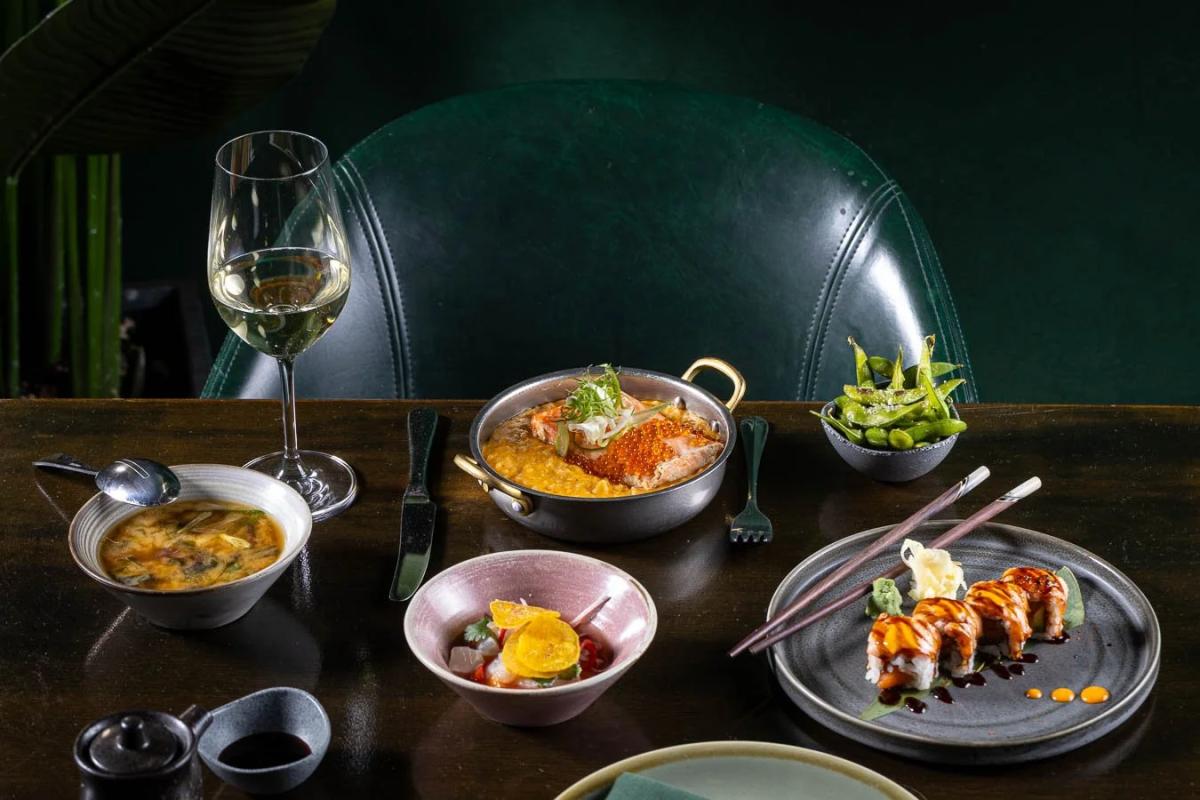
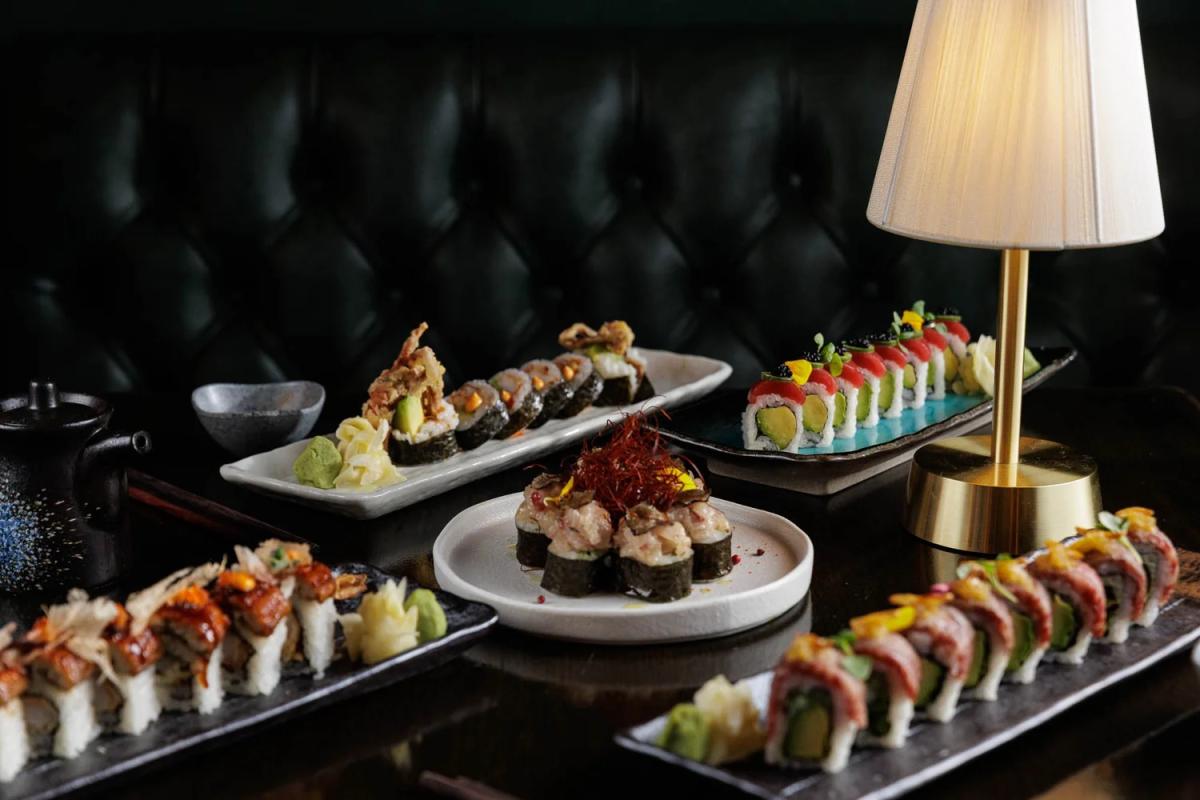
Sushi in a Nikkei context goes beyond the Japanese original — rolls incorporate Peruvian sauces, acevichado dressings, aji-based marinades, avocado and tropical textures. At Ayllu, the Truffle Roll and the Dragon Roll are signatures. The bluefin tuna nigiri is prepared as Head Sushi Chef Sandesh Baral would prepare any nigiri — fish-first, rice seasoned precisely, nothing unnecessary.
Anticuchos
Grilled skewers rooted in Peruvian street food tradition. Originally made with beef heart marinated in aji panca and vinegar, the Nikkei version applies Japanese grilling technique to the preparation — precise heat, clean char, nothing overworked. At Ayllu, the chicken and lamb skewers on the tasting menus carry this tradition.
Black Cod
Borrowed from Japanese cuisine — miso-glazed black cod is a dish most associated with Nobu Matsuhisa, one of the pioneers of Nikkei cooking globally. The miso marinade, the yielding texture of the cod, the balance of sweet and umami: it is one of the clearest expressions of Japanese technique applied without compromise. A fixture on Ayllu's à la carte menu.
Where To Experience Nikkei Cuisine In London
London has a handful of Nikkei restaurants — Chotto Matte in Soho being the most established. Ayllu in Paddington Central is one of the few dedicated to the cuisine outside of central Soho, and the only Nikkei restaurant in W2.
The kitchen at Ayllu is led by Head Chef Igor Pereira, who oversees the sharing plates, tasting menus and the full direction of the Nikkei menu. Head Sushi Chef Sandesh Baral handles all sushi. Two tasting menus run nightly — the Cuzco at £45pp and the Machu Picchu at £59pp — both designed as a complete introduction to what Nikkei does across nine courses.
For a first experience of Nikkei cuisine, the tasting menu format is the right way in. It moves through the full range — ceviche, tiradito, sushi, anticuchos, grilled mains — in the order that makes most sense on the palate.
Explore Ayllu's Nikkei tasting menus | View the full menu
Frequently Asked Questions About Nikkei Cuisine
-
No. Nikkei cuisine uses Japanese techniques but incorporates Peruvian ingredients and flavour principles — aji amarillo, leche de tigre, citrus-forward marinades — that are absent from traditional Japanese cooking. It is a distinct cuisine in its own right, not a subcategory of either tradition.
-
Peruvian chillies — particularly aji amarillo — are a staple of Nikkei cooking, but the heat is aromatic and fruity rather than aggressive. Most Nikkei dishes balance heat with acid and umami rather than leading with it. Guests with low spice tolerance generally find Nikkei cuisine accessible.
-
Yes — most Nikkei restaurants, including Ayllu, offer a vegetarian tasting menu on request. The cuisine's emphasis on vegetables, citrus and bold marinades means vegetarian dishes carry the same depth of flavour as the fish and meat courses.
-
Leche de tigre — "tiger's milk" — is the citrus-based marinade used in ceviche, made from lime juice, fish stock, aji amarillo, ginger and onion. It is one of the defining flavour components of Nikkei cuisine, and at Ayllu it is made in-house daily.
Nikkei cuisine rewards curiosity. The best introduction is always at the table.